Part 36 in a series on “The 27’s” – notable musicians who have passed away in their 27th year.
Bryan Ottoson was the guitarist for the band American Head Charge and passed away while on tour with the band in 2005. His body was discovered in a sleeping bunk on the band's tour bus in North Charleston, South Carolina where the group was set to play that evening.
According to North Charleston police records Ottoson's death was the result of a prescription-drug overdose. Police found a pill bottle containing "numerous amounts of prescription medicine" in Ottoson's bed.
Members of the band reported to police they had last seen Ottoson alive at around 4 a.m. on the morning of April 18, just as the band was departing Jessup, Maryland, for North Charleston and that Bryan had consumed "a large amount of alcohol at a bar" in Jessup that evening. Guitarist Karma Cheema told police that Ottoson was a "heavy sleeper, and it was not uncommon for him to sleep late before a concert."
American Head Charge was formed in 1997 by Cameron Heacock and Chad Hanks following a chance meeting in a Minnesota rehab center. In a interview with the magazine, Metal Hammer, Hanks said, "In the past three years, we've had two or three relapses, two treatment centers, a divorce, two members leaving, and a whole heap of other sh-- going on." In the same article, Cock alluded to the fact that alcohol and drug abuse had nearly ended the band in the past.
In August 2009 the band announced that they were disbanding after a nearly two year hiatus citing singer Cameron Heacock’s “inability to continue on a musical career path.”
This is the last article in a series on “The 27’s” – notable musicians who have passed away in their 27th year.
Lily Tembo was born in Kabwe, Zambia, and was raised in a music-loving family. Professionally known as Lily T, she was a Zambian musician, radio presenter, journalist and charity worker who had won national acclaim with her 2004 debut album Lily T. She released her second album in 2006 and was working on a third at time of her death.
Aside from singing, she was known for presenting on the 5th FM Radio network in Zambia, working as a journalist and involvement in charity work. Lily had been involved in raising malaria awareness in Zambia. In April 2009, she led worshippers at a world malaria day commemoration in Lusaka.
After complaining over "minor stomach pains" and suffering severe gastritis, Tembo died around 6:30 PM, September 14, 2009. Tembo's sister Patience told the press "She had gastritis, she fell sick on Saturday… she was vomiting a lot and developed anaemia. On Monday around 19:00 hours, she died." Her death was unexpected as she had no previous signs of illness and had been chatting with fans on Facebook on September 11.
Part 38 in a series on “The 27’s” – notable musicians who have passed away in their 27th year.
702, was a founding member of the R&B group 702, which included her twin sister Irish, sister LeMisha 'Misha' and lead singer Kameelah Williams. The group was named after the area code of their hometown of Las Vegas, Nevada where they were discovered by the comedian Sinbad.
LeMisha and Irish were students at the Las Vegas Academy of Performing Arts and would occasionally sing in the lobby of Caesars Palace. It was here that they met Sinbad who went to their home in order to convince their parents to send the trio to Atlanta for a convention and music competition. Sinbad suggested they use the name "Sweeta than Suga" and the trio placed second in the competition. Michael Bivins saw the trio at the competition and agreed to work with them. The sisters were briefly joined by their cousin Amelia Childs and together they recorded their first single, "This Lil' Game We Play." After the single was released Amelia dropped out of the group and was replaced by Kameelah Williams who LaMisha and Irish knew from school. Orish recorded with the group for their first album and then left the group as well.
Orish died on Sunday, April 20, 2008 from kidney failure. According to friends Orish had been very ill for a long time and at the time of her death also suffered from other medical complications, which included cancer that had yet to be treated.
Part 37 in a series on “The 27’s” – notable musicians who have passed away in their 27th year.
Valentín Elizalde was a popular Mexican banda music singer known by the nickname "El Gallo de Oro" (The Golden Rooster). He began performing professionally at a young age and recorded his debut solo album, “Regresan los Mafiosos,” in 1999. Releasing a record per year for the next several years, Elizalde slowly worked to establish himself as an important figure in the norteño genre. A high point in his career was reached in 2006, when he was featured on the soundtrack for the Mexican film “Al Otro Lado” with the song "Sobre la Tumba de Mi Padre."
On November 25, 2006. Elizalde and two companions, Mario Mendoza and Raymundo Ballesteros, were gunned down in an ambush in the city of Reynosa, twenty minutes after performing at a local fair. There were theories circulating that the murder had occurred because Valentin was somehow involved in trafficking, but with the capture of Raúl Hernández Barrón, known as El Flander I, in 2008 it was revealed that Valentin had been killed because Barrón thought the song “A Mis Enemigos” was about him and Los Zetas, a mercenary force employed in the Mexican drug trade.
Valentin’s murder was viewed as a tragic loss by his fans. Many posthumous releases and dedications have been released to honor his memory.
Part 35 in a series on “The 27’s” – notable musicians who have passed away in their 27th year.
Jeremy Michael Ward was the sound technician and vocal operator for The Mars Volta and for the dub outfit De Facto. He created many of the soundscapes heard on The Mars Volta's album De-Loused in the Comatorium. Ward, aside from his role in The Mars Volta and De Facto, played guitar, and was a visual artist working mostly in pen and ink.
Ward was found dead in his Los Angeles home by his roommate on the evening of Sunday, May 25, 2003 of an apparent heroin overdose. He was 27 years old at the time, and his death came less than a month before the release of De-Loused in the Comatorium. A journal Ward found while working in the repossession business in Los Angeles served as a source of inspiration for The Mars Volta's album Frances the Mute. Ward also came up with the name for Amputechture, The Mars Volta's third album. He was the cousin of At the Drive-In and Sparta member Jim Ward, and brother of El Paso punk rock bassist Jered Ward.
Ward's death was the impetus for The Mars Volta members Cedric Bixler-Zavala and Omar Rodríguez-López to quit using opioids.
Part 34 in a series on “The 27’s” – notable musicians who have passed away in their 27th year.
Born in 1973, Maria Serrano-Serrano was a trained nurse, dancer, model and singer in the band Passion Fruit.Established in 1999, Passion Fruit originally consisted of three women and a male who performed the rapping parts. It was this group that performed "The Rigga Ding Dong Song", which was the group’s most successful single.
Following the departure of one of the band members in October 1999 and tensions within the group, record company X-Cell Records decided not to continue with the project. Subsequently, the management team that created the group found a new line-up and a new record company and kept the name Passion Fruit to capitalize on the success of the first single.
The re-formed group consisted of only 3 members; Nathalie van het Ende, a background singer, dancer and model who was the second runner up in the 1995 Miss Holland pageant, Debby St. Marten, a dancer and model who had appeared in many music videos for Dutch and Belgian artists as well as Maria Serrano-Serrano.Over the course of 2000 and 2001, Passion Fruit released a trio of high charting singles and the album Spanglish Love Affairs.
On November 24, 2001, after a performance in Berlin they boarded Crossair flight 3597 to Zurich. On its way to landing, the pilot descended below the minimum descent altitude and crashed into a hill, killing twenty-four of the thirty-three on board.While Debby St. Marteen survived, Passion Fruit members Nathalie van het Ende and Maria Serrano-Serrano both passed away in the crash.
Passion Fruit was working on their second studio album in 2001 shortly before the crash. Only two singles were recorded during the period: "Bongo Man" and “I'm Dreaming Of...A White Christmas.” Both singles were released on separate singles albums in December 2001.
"I'm Dreaming Of...A White Christmas" was released on a singles CD called "I'm Dreaming Of...A Winter Wonderland” and in December 2001, Passion Fruit’s management decided to donate all the proceeds from the CD to the victims and survivors of the crash.
Part 33 in a series on “The 27’s” – notable musicians who have passed away in their 27th year.
In true Rock and Roll style, Sean Patrick McCabe choked to death on his own vomit while swilling alcohol on August 28, 2000. McCabe was the lead singer/song writer for the band Ink and Dagger.
Ink & Dagger was a punk band from Philadelphia, Pennsylvania who were active in the late 1990’s. The two permanent members throughout the band's career were guitarist Don Devore and vocalist Sean Patrick McCabe. Band members frequently incorporated references to vampires in their music, painted their faces, and played with fake blood. “Think of a vampire as a metaphor for the world,” says Robby Redcheeks, Ink & Dagger’s former roommate and road manager. “Blood is a person’s energy and vampires feed off of it. It had nothing to do with vampires per se, but was more a metaphor for punk rock and the society.”
“It was very discouraging to have people only see us as ‘that emo-goth-core band that wears makeup’ when there was much, much more to the puzzle,” singer Sean Patrick McCabe said in an interview with Ink19, a fanzine. “I can understand that some people never really took this band seriously.”
In 2000, shortly after finishing Ink & Dagger’s third and final album McCabe asphyxiated in an Indiana motel room.
Part 32 in a series on “The 27’s” – notable musicians who have passed away in their 27th year.
Raymond Rogers, better known as Freaky Tah, together with Mr. Cheeks, DJ Spigg Nice and Pretty Lou formed the hip-hop group called the Lost Boyz.The four Lost Boyz grew up together, earning money in their youth as drug dealers. The title of their 1996 debut album “Legal Drug Money” refers to going straight after seeing a drug dealer die in a shooting. Their second album, “Love Peace & Nappiness,” was released in 1997.
On the night of March 28, 1999, at Mr. Cheeks' 28th birthday party, Freaky Tah was shot in the back of his head by Kelvin Jones while he was going towards the exit of Sheraton Hotel. He was pronounced dead at about 4:20 AM.
The feud that resulted in the death of Freaky Tah can be traced back at least to November of 1998, when a member of the Lost Boyz was robbed.After the robbery someone police believe was a "hanger-on" in the Lost Boyz camp attempted to retaliate by shooting a man named Michael Saunders who was a member of the Hellraisers.The Hellraisers were described at the time not as a rap group, but more as a group of guys who were trying to put a rap group together.
Saunders, who actually had no involvement in the robbery, was the half-brother of Kelvin Jones.After Saunders was shot Jones went looking for the killer and when he heard that the Lost Boyz and their friends would be attending a party at a Sheraton Hotel, he recruited two friends to help him observe the party from a van outside the hotel.
The party cleared out as the evening stretched into the early morning of the28th and Jones, wearing a ski mask, left the van and walked into a crowd outside the hotel.In his confession to police, Jones said he chose Freaky Tah as his target because he believed the rapper was a cousin of the man who shot Saunders.
Three days after Freaky Tah's death, a man named Roger Paggent, who also was affiliated with the Hellraisers, was shot dead in Ozone Park, Queens.
Part 31 in a series on “The 27’s” – notable musicians who have passed away in their 27th year.
Patrick Lamont Hawkins, aka Fat Pat, was a rapper from Houston, Texas, and an original member of DJ Screw's Screwed Up Click. Also known as Mr. Fat Pat and Sugar Daddy, he was most prolific in the mid-1990s alongside his late brother Big Hawk and longtime friend Lil' Keke.
On February 3rd, 1998, Fat Pat was gunned down after he stopped by a promoter's apartment to collect an appearance fee. An apparent argument followed after Fat Pat told the promoter he would no longer be doing shows with him because of unpaid fees. The promoter left to get the money to pay the rapper. Sometime later Fat Pat was shot and left for dead.
Two weeks later, his debut album, Ghetto Dreams, dropped, featuring the underground hit single "Tops Drop." Four months later, Wreckshop Records released his second album, Throwed In Tha Game, which featured the single Holla At 'Cha Later. Weeks later, DJ Screw and the Screwed Up Click released their group's debut album, Screwed Up For Life.
Part 30 in a series on “The 27’s” – notable musicians who have passed away in their 27th year.
Richard James Edwards was a rhythm guitarist and lyricist of the alternative rock band Manic Street Preachers.Edwards vanished on 1 February 1995 and was declared presumed deceased in November 2008.
Edwards was initially a driver and roadie for Manic Street Preachers, but he soon became accepted as the band's main spokesman and fourth member. Edwards showed little musical talent - his real contribution to the Manic Street Preachers was in the words and design. Despite Edwards' lack of musical input, he nevertheless contributed to their overall musical direction and according to the rest of the band he played a leading role in deciding the approach of the band's sound.
Edwards suffered severe bouts of depression in his adult life, and was open about it in interviews: "If you're hopelessly depressed like I was, then dressing up is just the ultimate escape. When I was young I just wanted to be noticed. Nothing could excite me except attention so I'd dress up as much as I could. Outrage and boredom just go hand in hand.Gets to a point where you really can’t operate any more as a human being – you can’t get out of bed, you can’t...make yourself a cup of coffee without something going badly wrong or your body’s too weak to walk."
He also self-harmed, mainly through stubbing cigarettes on his body, and cutting himself and his problems with drugs and alcohol were well documented. After the release of the band's third album The Holy Bible, he checked into The Priory psychiatric hospital. On 15 May 1991, he gained notoriety following an argument with NME journalist Steve Lamacq, who questioned the band's authenticity and values.Lamacq asked of Edwards' seriousness towards his art, and Edwards responded by carving the words "4 Real" into his forearm with a razor blade he was carrying.The injury required hospitalization and eighteen stitches.
Edwards disappeared on 1 February 1995, on the day when he was scheduled to fly to the U.S. on a promotional tour.In the two weeks before his disappearance, Edwards withdrew £200 a day from his bank account, which totaled £2800 by the day of the scheduled flight.He checked out of his hotel at seven in the morning, and then drove to his apartment in Cardiff, Wales.In the two weeks that followed he was spotted several times in the area.On February 7th a taxi driver supposedly picked up Edwards from the King's Hotel in Newport, and drove him around the valleys, including Blackwood (Edwards’ home as a child). The passenger got off at the Severn View service station near Aust and paid the £68 fare in cash.
On 14 February, Edwards' car received a parking ticket at the Severn View service station and on 17 February, the vehicle was reported as abandoned. Police discovered the battery to be dead and that the car had been lived in. Since then he has reportedly been spotted in a hippie market in Goa, India and on the islands of Fuerteventura and Lanzarote. There have been other alleged sightings of Edwards, especially in the years immediately following his disappearance.However, none of these has proved conclusive and none has been confirmed by investigators.
While his family had the option of declaring him legally dead from 2002, they had chosen not to for many years, and his status remained open as a missing person, until November, 23 2008, when he became officially "presumed dead.”
Part 29 in a series on “The 27’s” – notable musicians who have passed away in their 27th year.
Kristen Pfaff was born and raised in Buffalo, New York, and attended Boston College and the University of Minnesota where she studied classical piano and cello. Following her graduation, Kristen taught herself to play bass guitar. With guitarist/vocalist Joachim Breuer and drummer Matt Entsminger she formed the band Janitor Joe.
Pfaff's playing style was relentless and central to Janitor Joe's sound, both live and recorded. The band was influenced by early grunge and the sharper, faster post-hardcore east coast punk sound. Their first single was released on OXO records imprint in 1992 and they followed with an album, Big Metal Birds, in 1993.
While on tour with Janitor Joe, Pfaff was scouted by Eric Erlandson and Courtney Love of Hole, who were at the time looking for a new bassist. Love invited Pfaff to play with Hole. Pfaff was initially reluctant to leave Minneapolis and join Hole but Erlandson and Love continued to pursue her. Eventually Pfaff relented as Hole was already signed to Geffen Records and from a career perspective joining an established band seemed to be a good move.
Kristen’s time with Hole was seemingly a good time for her, she formed a close relationship Kurt Cobain and began dating Eric Erlandson, they stayed together for most of 1993 and remained close even after splitting up. But during this period Pfaff developed a heroin addiction. She entered rehab in the winter of 1993, and took a sabbatical from Hole in spring 1994 to tour with Janitor Joe. Soon after the tour ended Kurt Cobain committed suicide and in the wake of his death Pfaff decided to leave Hole and return to Minneapolis to rejoin Janitor Joe permanently.
On June 15th 1994, Kristen was packed and ready to leave Seattle. A friend, Paul Erickson, was planning to drive her back to Minneapolis the next day. That evening around 8:00 pm Eric Erlandson stopped in to see Kristen, he is the last known person to see her alive. At 9:00 am the following morning Paul Erickson let himself into Kristen’s apartment, when he called for her, there was no reply. Searching the apartment he realized the bathroom door was locked, he called her again, and broke the bathroom door down finding Kristen dead having died from a heroin overdose sometime during the previous evening.
Her father, Norman Pfaff, described her as “bright, personable, wonderful...very, very talented, smart, and she always seemed to be in control of her circumstances.” In the book “Love & Death,” Kristen’s mother, Janet Pfaff, says that she has never accepted the official story regarding her daughter's death.
Part 28 in a series on “The 27’s” – notable musicians who have passed away in their 27th year.
Kurt Cobain was best known as the lead singer and guitarist of the grunge band Nirvana which he formed with Krist Novoselic in Aberdeen, Washington in 1985. Cobain has been remembered as one of the most iconic rock musicians in the history of alternative music. He was often uncomfortable and frustrated, believing his message and artistic vision to have been misinterpreted by the public and his personal issues often subject to media attention.
During the last years of his life, Cobain struggled with heroin addiction, illness and depression, his fame and public image, as well as the professional and lifelong personal pressures surrounding himself and his wife, Courtney Love. On April 8, 1994, Cobain was found dead at his home in Seattle, the victim of what was officially ruled a suicide by a self-inflicted shotgun wound to the head.
Cobain had been disillusioned and frustrated for some time and the months leading up to his suicide had seen an increase in his drug use and depression. In early March 1994, while on tour in Germany, Cobain was diagnosed with bronchitis and severe laryngitis. He flew to Rome the next day for medical treatment, and was later joined there by his wife. The next morning, Love awoke to find that Cobain had overdosed on a combination of champagne and Rohypnol. Cobain was immediately rushed to the hospital, and spent the rest of the day unconscious. After five days in the hospital, Cobain was released and returned to Seattle. Love later said that this was Kurt’s first attempt at suicide.
A few weeks later, Love phoned Seattle police informing them that Cobain was suicidal and had locked himself in a room with a gun. Police arrived and confiscated several guns and a bottle of pills from Cobain, who insisted that he was not suicidal and had locked himself in the room to hide from Love. When questioned by police, Love said that Cobain had never mentioned that he was suicidal and that she had not seen him with a gun.
Love arranged an intervention shortly thereafter. The intervention was initially unsuccessful, with an angry Cobain locking himself in the upstairs bedroom, but by the end of the day Cobain had agreed to undergo a detox program. At the end of March Cobain arrived at the Exodus Recovery Center in Los Angeles. He spent that first day talking to counselors about his drug abuse and playing with his daughter Frances. This was the last time she would see her father. The following night, Cobain walked outside to have a cigarette and climbed over a six-foot-high fence to leave the facility.
On 2 April and 3 April 1994, Cobain was spotted in various locations around Seattle. Love contacted a private investigator and hired him to find Cobain. On 8 April 1994, Cobain's body was discovered at his Lake Washington home by an electrician who had arrived to install a security system. Apart from a minor amount of blood coming out of Cobain's ear, the electrician reported seeing no visible signs of trauma, and initially believed that Cobain was asleep until he saw the shotgun pointing at his chin.
A suicide note was found, addressed to Cobain's childhood imaginary friend "Boddah", that said, paraphrasing, "I haven't felt the excitement of listening to as well as creating music, along with really writing . . . for too many years now.” A high concentration of heroin and traces of Valium were also found in his body. Cobain's body had been lying there for days, the coroner's report estimated Cobain to have died on 5 April 1994.
Dave Grohl would say that the news of Cobain's death was "probably the worst thing that has happened to me in my life. I remember the day after that I woke up and I was heartbroken that he was gone. I just felt like, 'Okay, so I get to wake up today and have another day and he doesn't.'"
A final ceremony was arranged for Cobain by his mother on 31 May 1999. As a Buddhist monk chanted, his daughter Frances Bean scattered his ashes into McLane Creek in Olympia, the city where he "had found his true artistic muse."
Part 27 in a series on “The 27’s” – notable musicians who have passed away in their 27th year.
Mia Zapata was the lead singer for the Seattle punk band The Gits. She was born and raised in Louisville, Kentucky, where she learned to sing and play guitar. Her early influences were singers Bessie Smith, Billie Holiday, Jimmy Reed, Ray Charles, Hank Williams and Sam Cooke. She was on the forefront of the “foxcore” trend in the early 90’s, loud and aggressive female fronted groups.
While attending Antioch College in Yellow Springs, Ohio, she co-founded the band, The Gits, and by 1989 the band had relocated to Seattle to take advantage of the emerging music scene there. In the early 90’s The Gits released a number of singles on indie labels and in 1992 their first album, “Frenching the Bully” was released. The reviews were good and 1993 found the band working on a follow-up album.
On the morning of July 7, 1993, around 2:00 a.m., Zapata was brutally murdered. The Seattle Times gave this timeline leading up to her death:
Mia got out of bed around 11 a.m. on July 6, 1993, a clear, warm Tuesday. Seattle was still picking itself up from the Fourth of July. Richard Zapata drove in from Yakima, where he lived, and took his daughter to lunch at a Thai restaurant on Queen Anne. Afterward, they walked to Tower Records and then drove to the Seattle Art Museum.
Father and daughter got together once or twice a month. Zapata did not condone the lifestyle his daughter had chosen. At times he was revolted by it. And he worried for her. "She was very naive about the life she chose," he says.
About 3 p.m. they said goodbye at the bottom of the steps of her Rainier Valley rental. Zapata told his daughter he would call her in a few days. Mia did laundry, walked the dog. At least one roommate was home at the time.
Around 6:30 p.m., she found her way to the Winston Apartments on Capitol Hill. In the back was a makeshift rehearsal studio. She rehearsed with her boyfriend's band, Hells Smells, for a couple of hours. Her boyfriend, whose name was tainted early in the investigation before police cleared him, asked that his name not be printed here.
At about 8:30 p.m., Mia walked over to the Comet Tavern, a loud, friendly, thoroughly lived-in watering hole a block away, on East Pike Street. The tavern was a hangout for The Gits and their circle. On one carved-up booth in the back, Mia's name is still inscribed in the wood.
She sauntered in wearing the same clothes she'd worn all day: boots, rolled-up blue jeans, a hooded black sweatshirt with "Gits" on the back. She carried a Walkman, and one of her calves bore a tattoo of a chicken in honor of her childhood nickname, "Chicken legs."
It is believed she encountered her murderer shortly after 2:15 am. According to the television show Unsolved Mysteries, a man two blocks from the Comet Tavern heard a scream around 3 am. A woman found her body in the street at around 3:30 am near the intersection of 24th Avenue South and South Washington Street in the Central District neighborhood. Her body was in a Christ-like position, which gave rise to the belief that it was a cult killing. According to the medical examiner, if she had not been strangled she would have died from the internal injuries suffered from the beating.
Her slaying, which remained unsolved for years, sparked outrage and fear among family, friends and fans. An all-night candlelight vigil was held in Zapata's memory and friends, includuing Kurt Cobain and members of Pearl Jam, raised money to hire a private investigator to help find the killer and start a women's self-defense group.
In 2003 Florida fisherman Jesus Mezquia was linked to the crime when a DNA profile was extracted from saliva left on in a bite mark on Zapata's body. Mezquia was born in Cuba, lived in Seattle at the time of the murder, and his home address was about three blocks from where Zapata's body was found. He had a history of violence toward women, including domestic abuse and assault and battery. A report of indecent exposure had been filed against him in Seattle two weeks before Zapata's murder.
Mezquia was convicted of the murder and sentenced to 36 years in prison. The average sentence for his crime was 18 to 28 years, but due to the extreme violent nature of the crime the judge imposed a much longer sentence. The Washington Court of Appeals overturned the sentence in 2005 based on a U.S. Supreme Court ruling known as the Blakely decision, which said that “any factor that extends a sentence beyond its standard range must be proven by a jury or admitted by the defendant.”
Part 26 in a series on “The 27’s” – notable musicians who have passed away in their 27th year.
Pete Louis Vincent de Freitas was born in Port of Spain, Trinidad and Tobago and joined the Echo and the Bunnymen in 1979. Pete was not one of the founding members of the band, as he was brought into the band to replace the drum machine that had been used on their first album. He quickly proved that he was much more than an average drummer, providing the beats on the albums; Crocodiles, Porcupine, Heaven Up Here, and Ocean Rain.
In early 1986, Pete became disillusioned with the band and left for a new project called The Sex Gods. Pete went to New Orleans with the idea to work “totally off chance” and “to get away on holiday and come back with more than just memories.”
The New Orleans trip soon became less about the music and more about rock 'n' roll excess. De Freitas totaled two cars, two motorcycles, and nearly himself. He reportedly consumed mass amounts of drugs, alcohol and stayed awake for eighteen days straight.
Mars Williams, who was invited to join the group, remembers, “[De Freitas] was singing, and also decided that he was going to play guitar. We rehearsed a bit in the house, wrote and worked on songs, and then we went into the studio and recorded some of it. The thing that was really bad about the band was that Pete should’ve been playing drums, because he was a great drummer, and the guy that was playing drums wasn’t. And Pete was not a good guitarist, so who knows what he was trying to do. It was more like Pete’s friends hanging out”
During the summer the band recorded some songs, but this line-up wouldn’t last for long. As his finances dwindled, members of The Sex Gods began drifting home one-by-one, expressing concerns about De Freitas’ mental health. By the end of 1986 Pete had rejoined the Bunnymen for good and The Sex Gods disbanded.
The Bunnymen never found their way back to the success that they had once achieved. Vocalist Ian McCulloch left the band and the three remaining members started recording with a new singer. In 1989, the new line up were in rehearsals in Liverpool and Pete was on his way there when he crashed his motorcycle on a back road near Rugely in Staffordshire.
Part 25 in a series on “The 27’s” – notable musicians who have passed away in their 27th year.
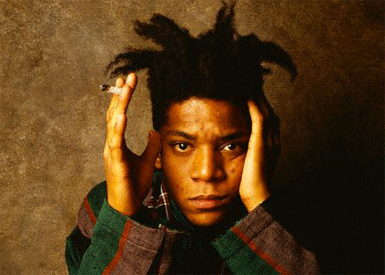
Jean-Michel Basquiat was more known as an artist than a musician. He was born in the Park Slope neighborhood of Brooklyn, New York, the first of three children to Matilde and Gerard Basquiat. His mother was a Puerto Rican and his father was a Haitian immigrant to the United States. At an early age, Basquiat displayed an aptitude for art, and was encouraged by his mother to draw, paint, and to participate in other artistic activities.
When Basquiat was seven years old, his parents divorced and his mother suffered severe bouts of bipolar disorder due to the separation. She was deemed unfit to care for children, so Basquiat and his younger sisters, Lisane and Jeanine, were raised by their father in the Midwood neighborhood of Brooklyn. His father was alleged to be a violent alcoholic, and Basquiat would later claim that he endured physical and emotional abuse by his father.
When Basquiat was 15 years old, he ran away from home in order to escape his father. He slept on park benches in Washington Square Park, supported himself by panhandling, drug dealing, selling T-shirts and homemade post cards, and working in the Unique Clothing Warehouse in the West Broadway district of Manhattan. Searching for a home, Basquiat was legally adopted by a friend's parents as he refused to be returned to the care of his father.
While a high school student, Basquiat and Al Diaz started spray-painting graffiti on buildings in Lower Manhattan, working under the pseudonym SAMO. The designs inscribed messages such as "Plush safe he think.. SAMO" and "SAMO as an escape clause.” In December 1978, the Village Voice published an article on the graffiti. The SAMO project ended with the epitaph "SAMO IS DEAD," inscribed on the walls of SoHo buildings.
In the late 1970s, Basquiat formed the punk rock band Gray with Vincent Gallo, Shannon Dawson, Michael Holman, Nick Taylor and Wayne Clifford. Gray performed at nightclubs such as Max's Kansas City, CBGB, Hurrah, and the Mudd Club. Basquiat starred in an underground film Downtown 81 which featured some of Gray's recordings on its soundtrack.
In June 1980, Basquiat participated in The Times Square Show, a multi-artist exhibition, sponsored by Collaborative Projects Incorporated and Fashion Moda. In 1981, Rene Ricard published "The Radiant Child" in Artforum magazine, which brought Basquiat to the attention of the wider art world. He briefly dated then-aspiring performer Madonna in September 1982. That same year, Basquiat met Andy Warhol, with whom he collaborated from 1984 to 1986. He was also briefly involved with artist David Bowie.He was a successful artist in this period, however increasing drug addiction began to interfere with his personal relationships.
After Warhol died on February 22, 1987, Basquiat became increasingly isolated, and his drug addiction and depression increased. After an attempt at sobriety during a trip to Honolulu, Hawaii, Basquiat died due to a heroin overdose in his SoHo studio on August 12, 1988.
Part 24 in a series on “The 27’s” – notable musicians who have passed away in their 27th year.
Alexander Bashlachev was a Russian poet, rock musician and songwriter.He was born on May 27, 1960 in Cherepovets, Soviet Union.In 1977, Alexander graduated from Cherepovets High School and then spent a year working at the Cherepovets Steel Mill.In 1978, Bashlachev resigned and began to attend Ural State University in Sverdlovsk to study Journalism.
Bashlachev's first-known song appeared in 1983, titled "Griboyedov Waltz.”Later, in 1983, Bashlachev graduated from the Ural State University. He returned to Cherepovets, where he worked for a year with a newspaper named "The Communist.”In May 1984, Bashlachev visited the St. Petersburg rock festival, where he bought a guitar and in September of that year, at the apartment of a friend, he performed some of his songs.
At this point in Russian history, rock music was under extreme censorship. To get around this, artists played for small audiences, usually numbering in the single digits, at homes of friends. These small gatherings were called "kvartirniks."
In March 1985, Bashlachev appeared at a festival in Leningrad along with Yuri Shevchuk. The two played to an audience of six at the Leningrad Veterinary Institute. A recording of this concert was released under the title of "Kochegarka.” It was there that Bashlachev joined the Leningrad Rock Club and also performed at the legendary Kamatchka boiler. (The boiler was just that--a boiler) Bashlachev also performed at the Leningrad rock festival of 1987.
Shortly before his death, Bashlachev was struck by writer's block, rarely writing new songs and attempting to avoid performing old ones. His last-known song was titled "Cherry" and was written in 1986.
Bashlachev died on February 17, 1988, after falling from the window of the ninth floor of his home on Kuznetsova Avenue in Leningrad. The most plausible version of his death is suicide, but there is some uncertainty in that claim.
Part 23 in a series on “The 27’s” – notable musicians who have passed away in their 27th year.
Dennes Dale Boon, aka D. Boon, was a singer, songwriter and guitarist influential in the punk scene of the early 80’s. He formed is first band, The Reactionaries, with best friend Mike Watt 1978. In 1980 the band broke up and Boon, along with Watt and Reactionaries drummer George Hurley, formed the punk trio Minutemen.
The band became part of the punk scene that was emerging on Sunset Strip in Los Angeles and soon signed with Black Flag's SST label. The Minutemen were one of punk's most politically charged bands and their philosophy of "punk is whatever we make it to be," connected with their young audience. The band’s sound was characteristic of Boon’s style, he yelled his vocals and played guitar without distortion and most often with the bass turned all the way off and the treble all the way up. From 1981 through 1985 the Minutemen toured constantly and released a number of albums for SST. Their most successful album was Double Nickels on the Dime.
Boon's life was tragically cut short on December 22, 1985, when he was killed in an auto accident in the Arizona desert near the Californian border on route I-10. He had been sick and laid down in the back of the band’s touring van. Because he was lying down, he was not wearing a seatbelt when the van ran off the road. Boon was thrown out the back door of the van and died instantly from a broken neck.
Mike Watt was devastated at the loss of his friend and the Minutemen immediately broke up, though Watt and Hurley would later form the band fIREHOSE. Watt would also later join the Stooges as a replacement bassist. His solo 1997 release, Contemplating The Engine Room, was inspired by and a tribute to his childhood friend, D. Boon.
Part 22 in a series on “The 27’s” – notable musicians who have passed away in their 27th year.
Jacob Miller was born in Mandeville, central Jamaica on May 4, 1952 and was successful both as lead singer for the reggae group Inner Circle and as a solo artist. It's difficult to draw a distinct line between Miller's solo career and his work with Inner Circle, not only were many of his releases co-produced by himself and Roger Lewis (of Inner Circle) but most all of his solo work was backed by at least some of Inner Circle.
Inner Circle was an emerging reggae group made popular playing covers of American Top 40 hits. Bandleader Roger Lewis said Jacob Miller was “always happy and jovial. He always made jokes. Everyone liked jokes.” They signed with Capitol Records in 1976 and released two albums, “Reggae Thing” and “Ready for the World.” As a soloist he earned second place in Jamaica’s 1976 Festival Song competition with the song “All Night ‘Till Daylight” and produced his first solo album in 1978, “Dread Dread.”
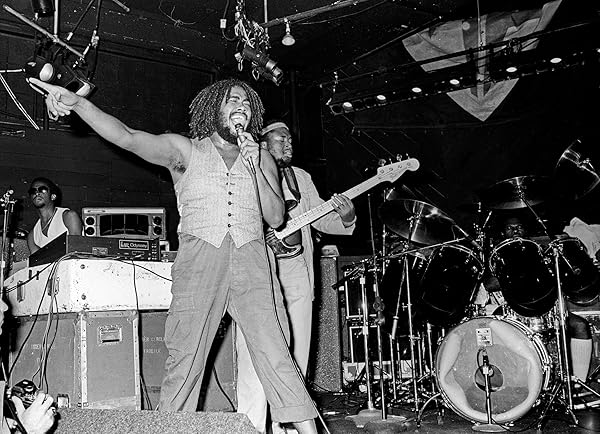
Jacob had a charismatic stage presence and Inner Circle’s performance at Jamaica’s One Love Peace Concert in April 1978 put them in the international spotlight. During that concert Miller brought together rival gang leaders Claudie Massop of the Tivoli gang and Tony Welch of the Jungle gang. Miller also invited members of the Jamaican political coalition the 'Peace Committee' on to the stage for a rendition of “Peace Treaty Special.” After this concert the group was approached by Chris Blackwell of Island Records, for whom the group produced their third album, “Everything is Great,” which sold over a half million copies in Europe.
In March 1980, Miller accompanied Bob Marley and Island head Chris Blackwell to Brazil, to celebrate the opening of the label's new offices there. Meanwhile, the rest of Circle were preparing for their forthcoming American tour in support of the Wailers as well as preparing a new album, “Mixed Up Moods” that had not yet been released.
The trio returned to Jamaica on March 21, 1980 and the next day Miller performed at the Tower Street Correctional Facility. On Sunday, March 23, 1980 Miller was killed when his car crashed into a stoplight at the intersection of Hope and Waterloo roads in Kingston, Jamaica.
Part 21 in a series on “The 27’s” – notable musicians who have passed away in their 27th year.
Chris Bell’s first love was the music of the British invasion and inspired by the Beatles he took up the guitar in his early teens. Born January 12, 1951 in Memphis, his musical interested fell well outside the mainstream of the Memphis music scene of the time.
In high school, Bell struck up a friendship with another young performer named Alex Chilton. Chilton soon rose to fame as the front man of the Box Tops and Bell became entrenched at Memphis' Ardent Studios, where he worked as a part-time recording engineer and also cut his earliest songs with friends Richard Rosebrough and Terry Manning.
The group that would later be known as Big Star stemmed from two of Bell’s band projects that began in the late 1960’s - Icewater and Rock City. These groups featured Rosebrough and Manning as well as musicians Jody Stephens, Tom Eubanks, Andy Hummel, Vance Alexander and Steve Rhea. Bell eventually asked Chilton to join and during a period of recording demos and tracks for their first album, the group settled on the name "Big Star."
The lineup for Big Star's first album was composed of Bell, Chilton, Hummel and Stephens. Bell and Chilton wrote most of the group's songs, with occasional writing contributions from Hummel and Stephens. Along with Terry Manning, Bell is also credited with much of the mixing and engineering work done on the first Big Star album.
The album, released in 1972, failed to achieve commercial success mostly due to bad marketing by the record label Stax, whose catalog was predominately soul oriented at the time. Crushed, Bell became suicidal and left the band, only contributing to a few tracks on the follow-up album. Chris’ brother David went with him to Chateau D'Herouville studios in France, where they recorded demos for a new album. After the tracks were cut the Bell brothers mixed the songs at producer George Martin's Air Studios in London.
Chris returned to the United States for a planned Big Star reunion tour, but when the reunion fell apart Chris dropped out of music all together, taking a job in father’s fast food restaurant where he continued to fight depression.
Bell died on December 27, 1978 at the age of 27 when he lost control of his car, sometime while on his way home from work. The car struck a wooden light pole on the side of the road, killing him instantly. His funeral was held the next day, December 28, the birthday of former band mate Alex Chilton.
Over the course of the following decade, the reputation of Big Star continued to grow and eventually Bell's long-unreleased demos were collected under the title “I Am the Cosmos.” The album was released in 1992 and quickly became a critical success, strongly influencing the singer/songwriter movement for years to come.
Part 20 in a series on “The 27’s” – notable musicians who have passed away in their 27th year.
German musician Helmut Köllen was born in 1950 and most notably the bassist and vocalist for the progressive rock band, Triumvirat. Helmut joined the already established band in time to the band’s two most famous albums: “Spartacus” and “Illusions on a Double Dimple.”
Helmut left Triumvirat at the end of 1975 after the "Spartacus" album to pursue a solo career. In 1976, the German group Jail released their only album "You Can Help Me,” which featured Helmut as a guest musician on some songs. Helmut briefly returned to Triumvirat, but nothing transpired from this reunion and Helmut began working on a solo album titled "You Won't See Me," named for one of The Beatle's songs that he liked the most.
Sadly, Helmut’s career was cut short. On May 3, 1977 Köllen went to his car to listen to some cassettes containing new tracks he had recorded. With the motor running and the car parked in his garage he asphyxiated and died of carbon monoxide poisoning. Whether his death was a suicide or an accident is anyone’s guess, however, suicide seems unlikely as work was being completed on his new album and there was no suicide note or reason to suspect it.
His debut solo album, “You Won't See Me” was released posthumously in October 1977.